What challenge does Nakawé solve for artisans?
It provides a direct, modern, and reliable digital storefront for premium handmade textiles, bypassing predatory middlemen and celebrating cultural craftsmanship.
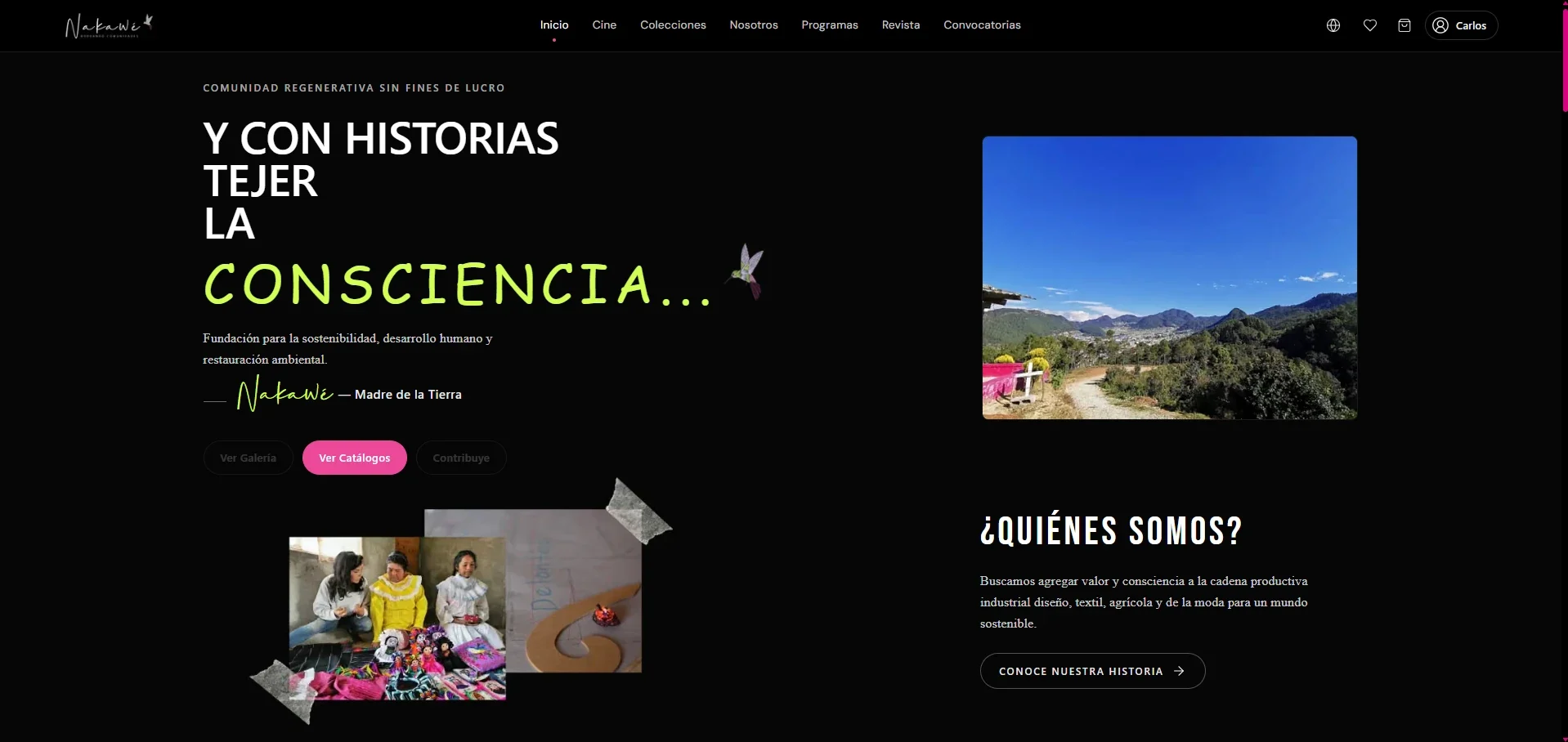
Nakawé · Full-Stack Artisan E-Commerce
Nakawé unites the richness of traditional Mexican artisan craft with modern e-commerce engineering: dynamic garment catalog, interactive variant selection, persistent cart, and secure dual-gateway payments via Stripe and PayPal.
Completed Project · 2025
01 · Propuesta de valor
Nakawé was designed to overcome the limitations of generic storefronts. Every collection, garment, and variant tells a textile story, backed by fast checkouts, dependable inventory control, and transaction integrity.
The platform balances visual aesthetics honoring the textile traditions of Chiapas and Mexican artisan heritage with demanding engineering standards: React Server Components for near-instant loads, a serverless relational database for strict stock tracking, and idempotent webhooks for zero payment discrepancies.
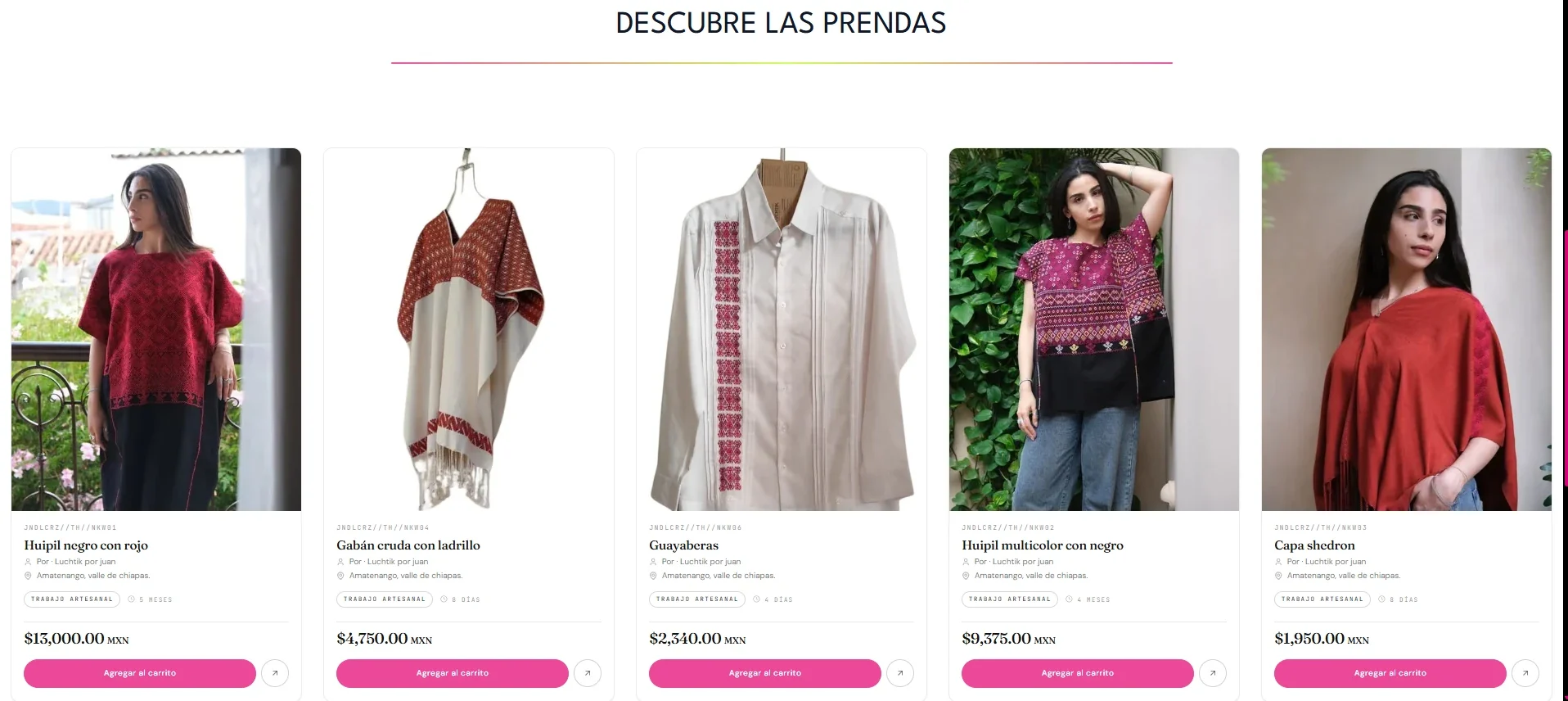
Structured discovery across product lines, traditional garments, and accessories with instant filters.
Size selection, reactive cart, order persistence, and dual payment options with Stripe and PayPal.
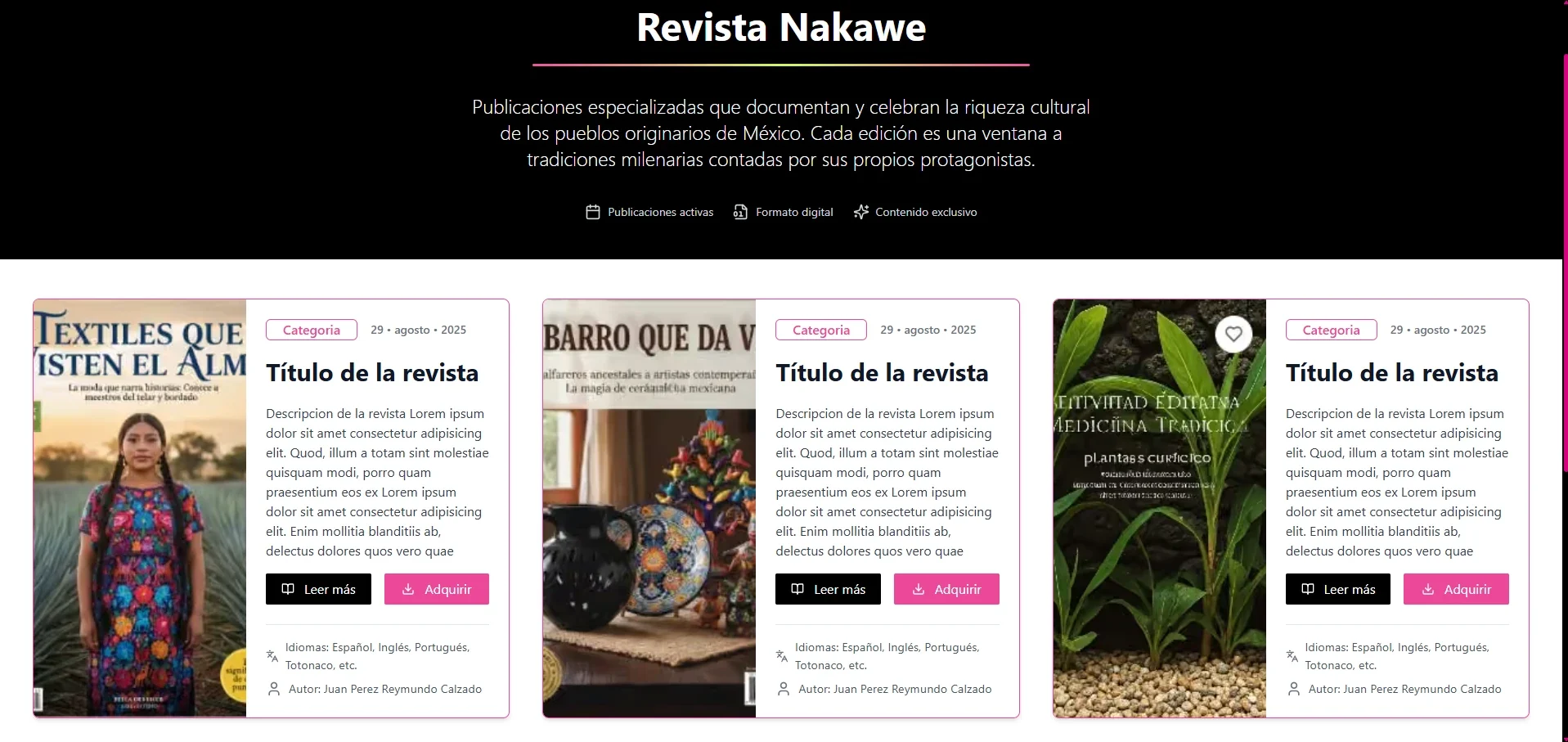
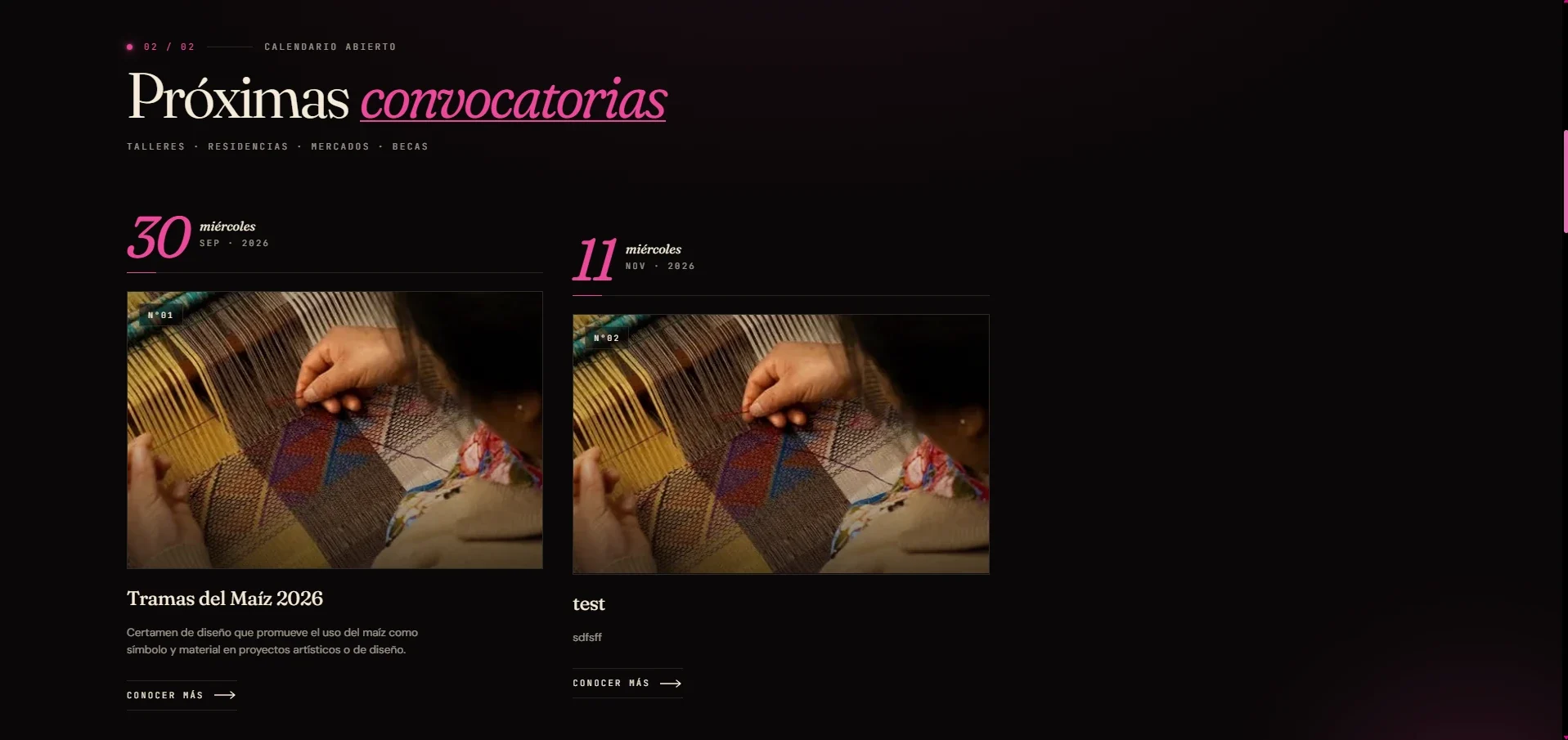
Integrated editorial platform with a digital magazine and open calls for artisans and workshops.
02 · Flujo transaccional
Every step is optimized to earn buyer confidence while safeguarding the transactional consistency of each order.
Intuitive navigation across thematic collections and artisan categories.
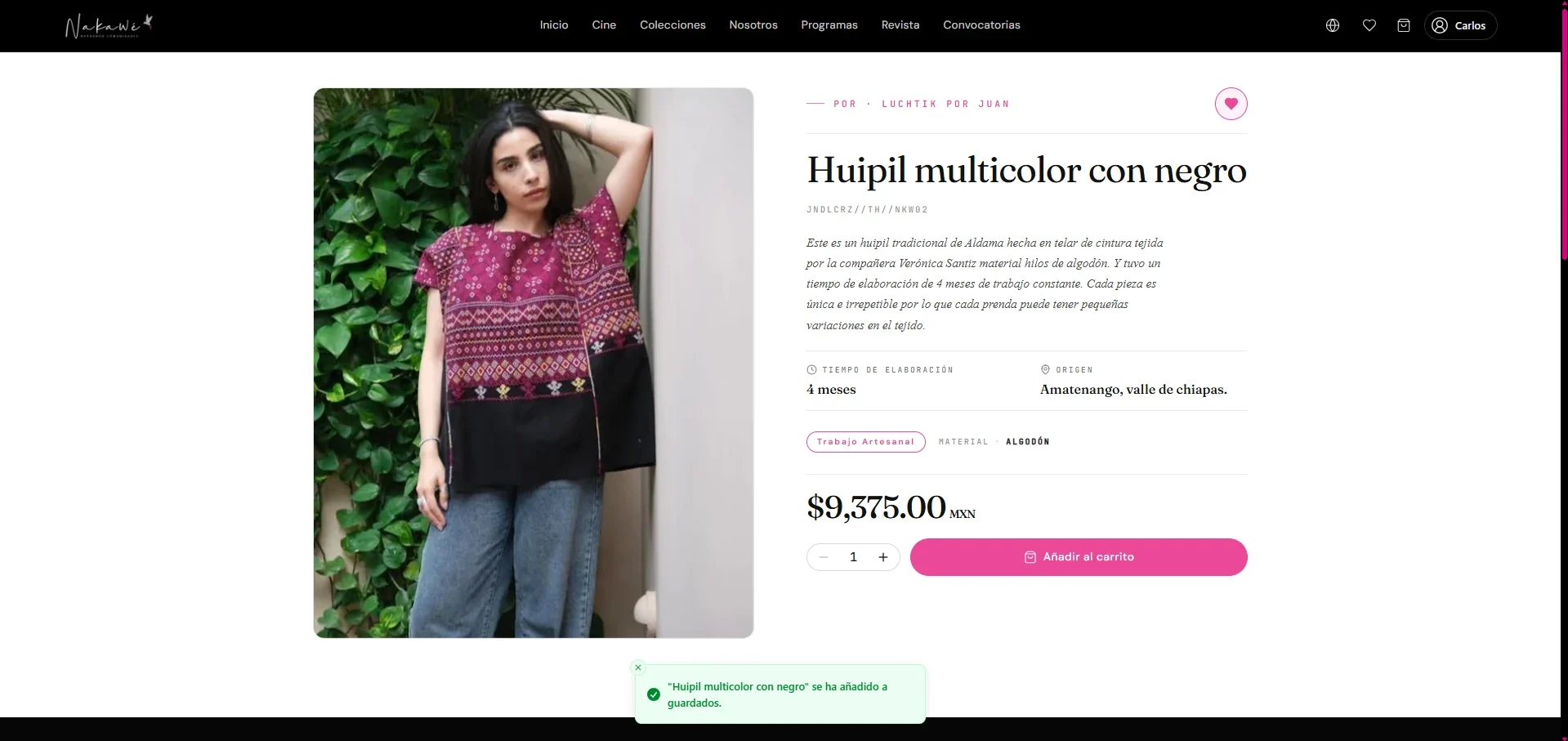
Review specifications, embroidery close-ups, and choose exact sizes.
Atomic cart with live subtotal calculation, coupons, and stock verification.
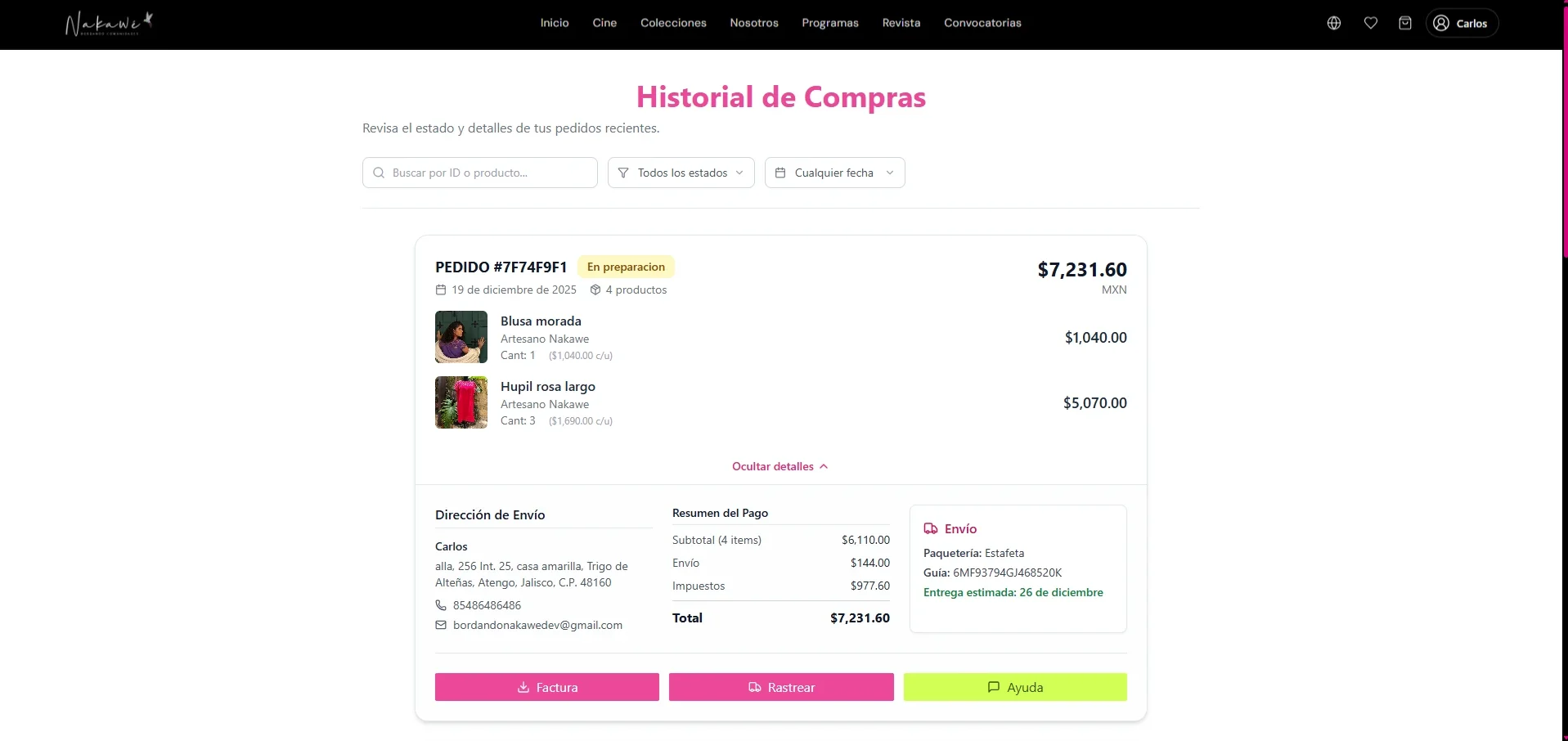
Secure checkout via card (Stripe) or PayPal, with continuous order history updates.
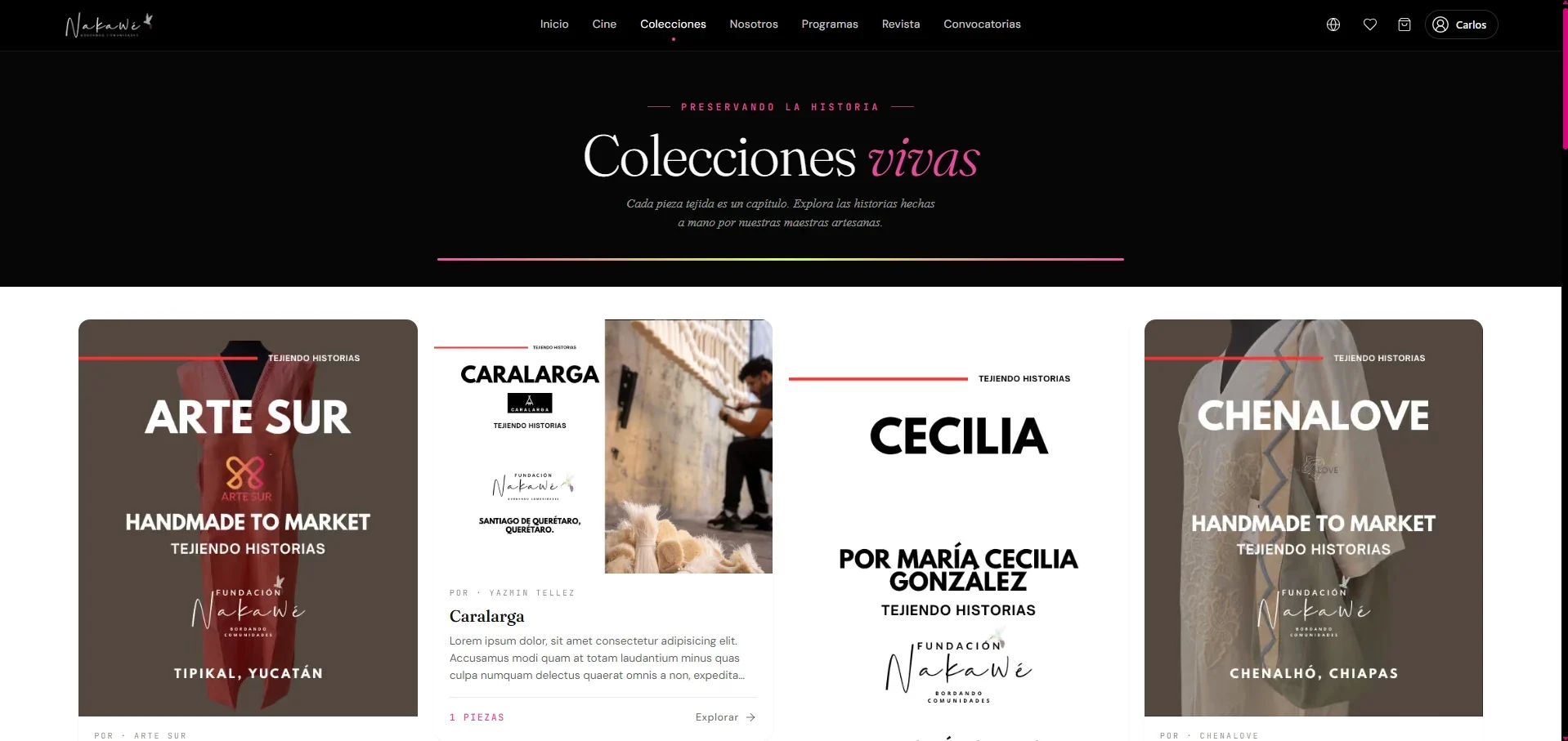
03 · Catálogo y ficha técnica
The visual design foregrounds authentic textile photography and clear pricing, sizing, and variants. Purchase controls remain right at hand without distracting from the artistic work.
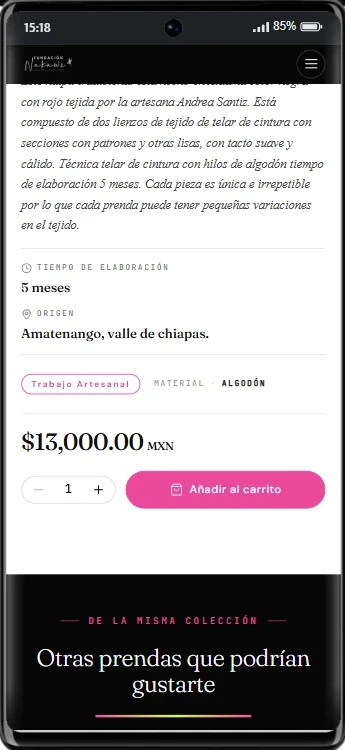
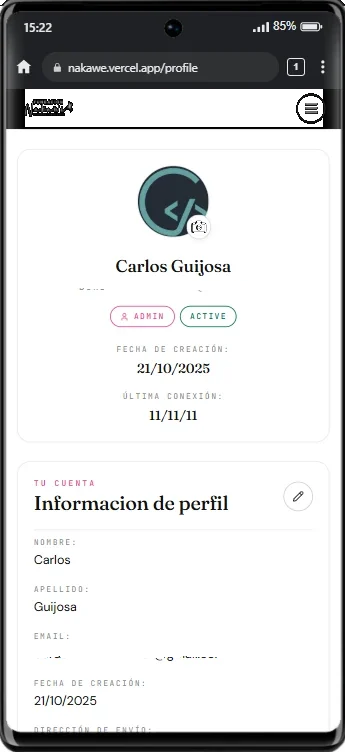
04 · Adaptabilidad móvil
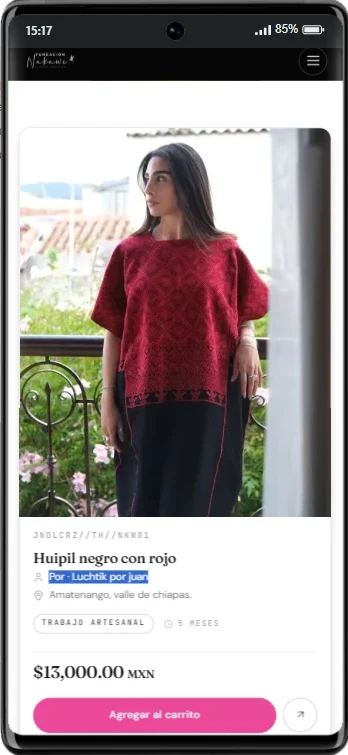
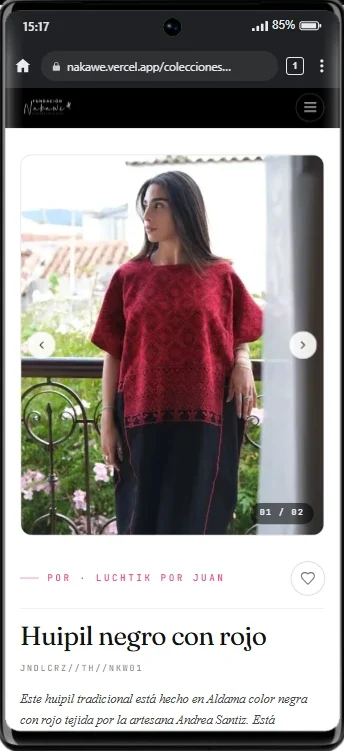
Navigation, collection filters, and product details reflow gracefully into a vertical layout. Interactive buttons meet generous 48px hit areas for effortless single-handed navigation.
05 · Flujo de compra y cliente
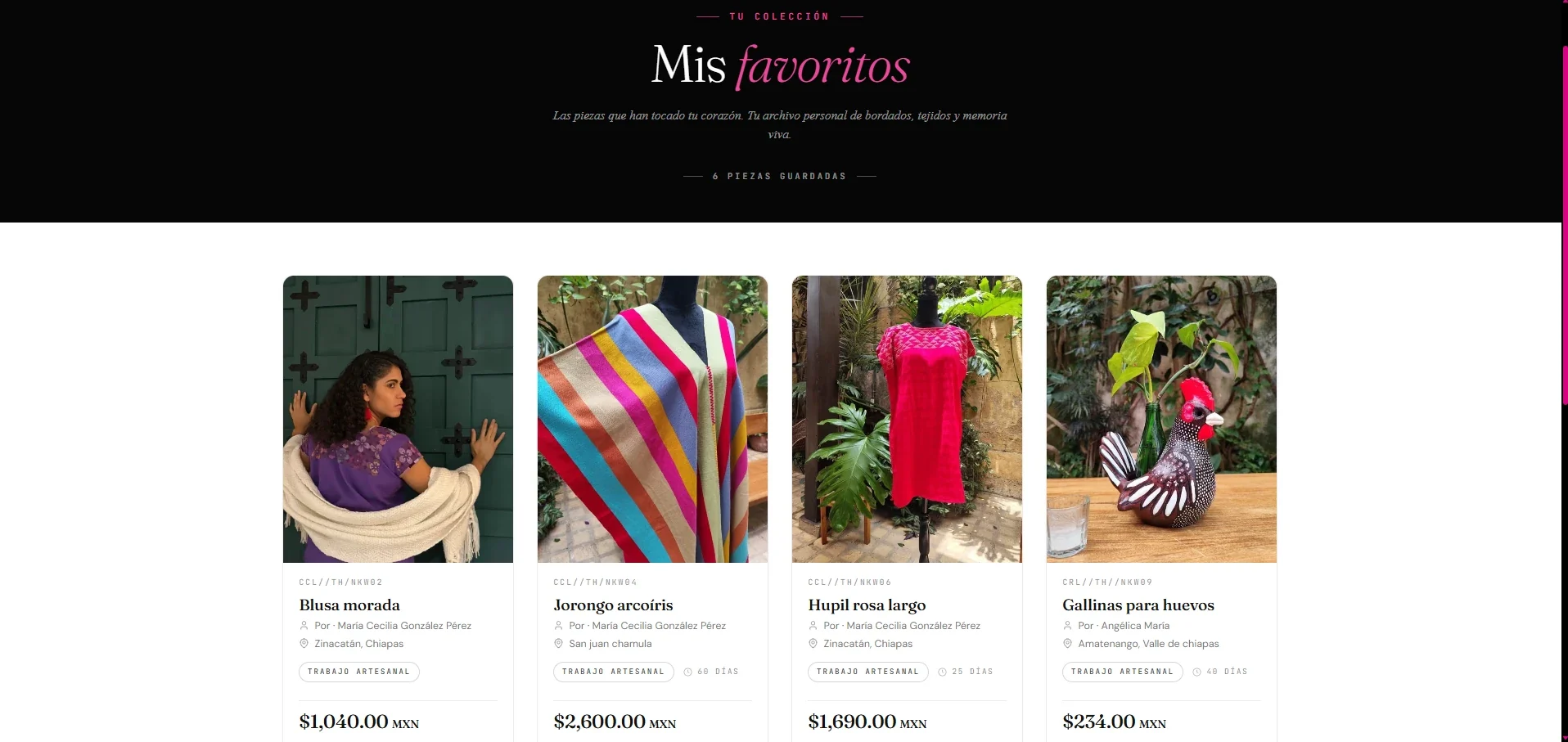
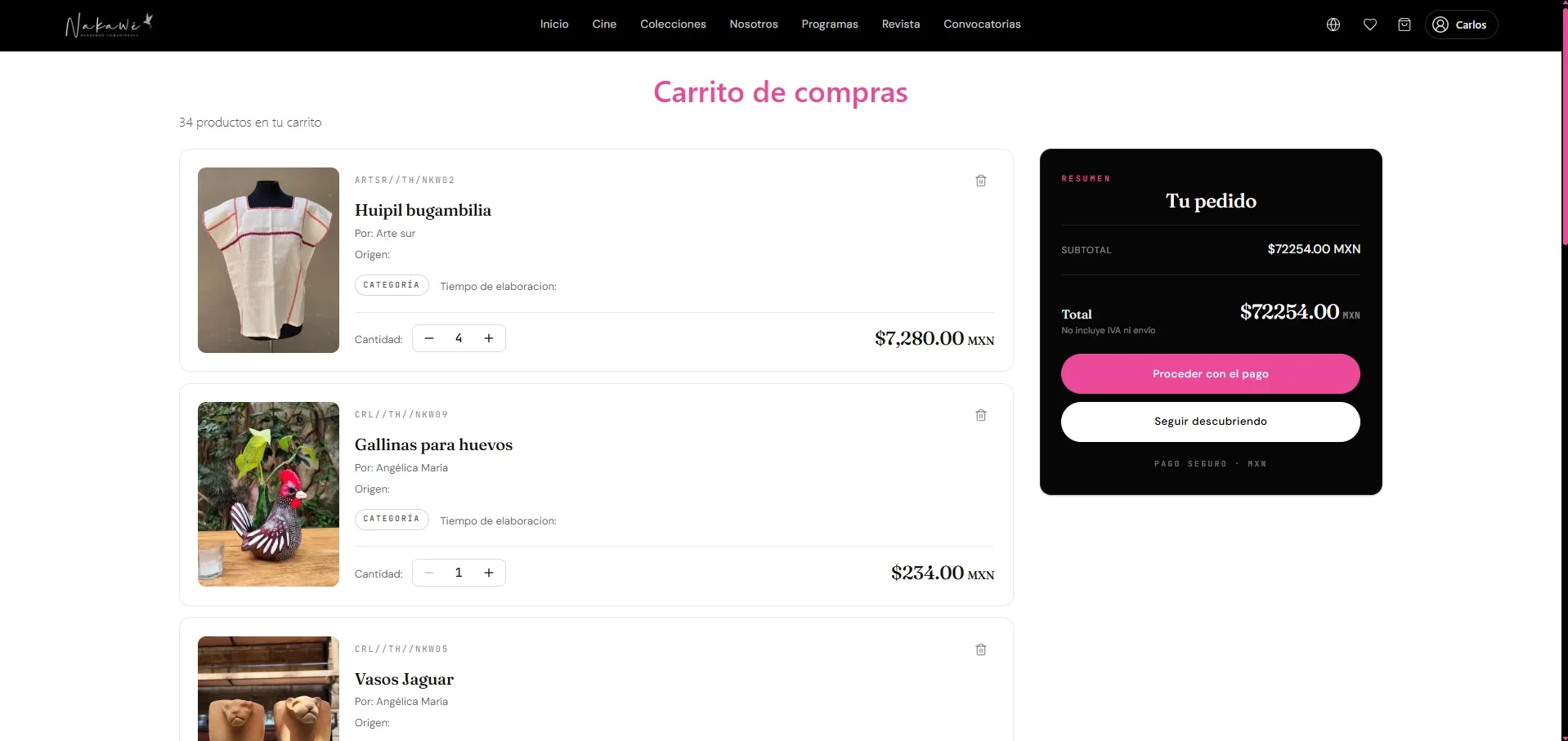
The purchasing path removes friction: the cart clearly itemizes units and subtotals, saved favorites allow effortless bookmarking, and the orders portal keeps buyers updated on delivery progress.
06 · Decisiones técnicas
Next.js manages high-performance rendering across client and server; Neon PostgreSQL supplies an elastic serverless relational database with high availability.
Next.js App Router with Server Components and Tailwind CSS for minimal load times.
Neon PostgreSQL with robust schemas for users, products, variants, and orders.
Deep integration of Stripe and PayPal with server validation and idempotent webhooks.
Cloud infrastructure through Cloudflare and Vercel for global asset caching and resilience.
07 · Proceso de diseño
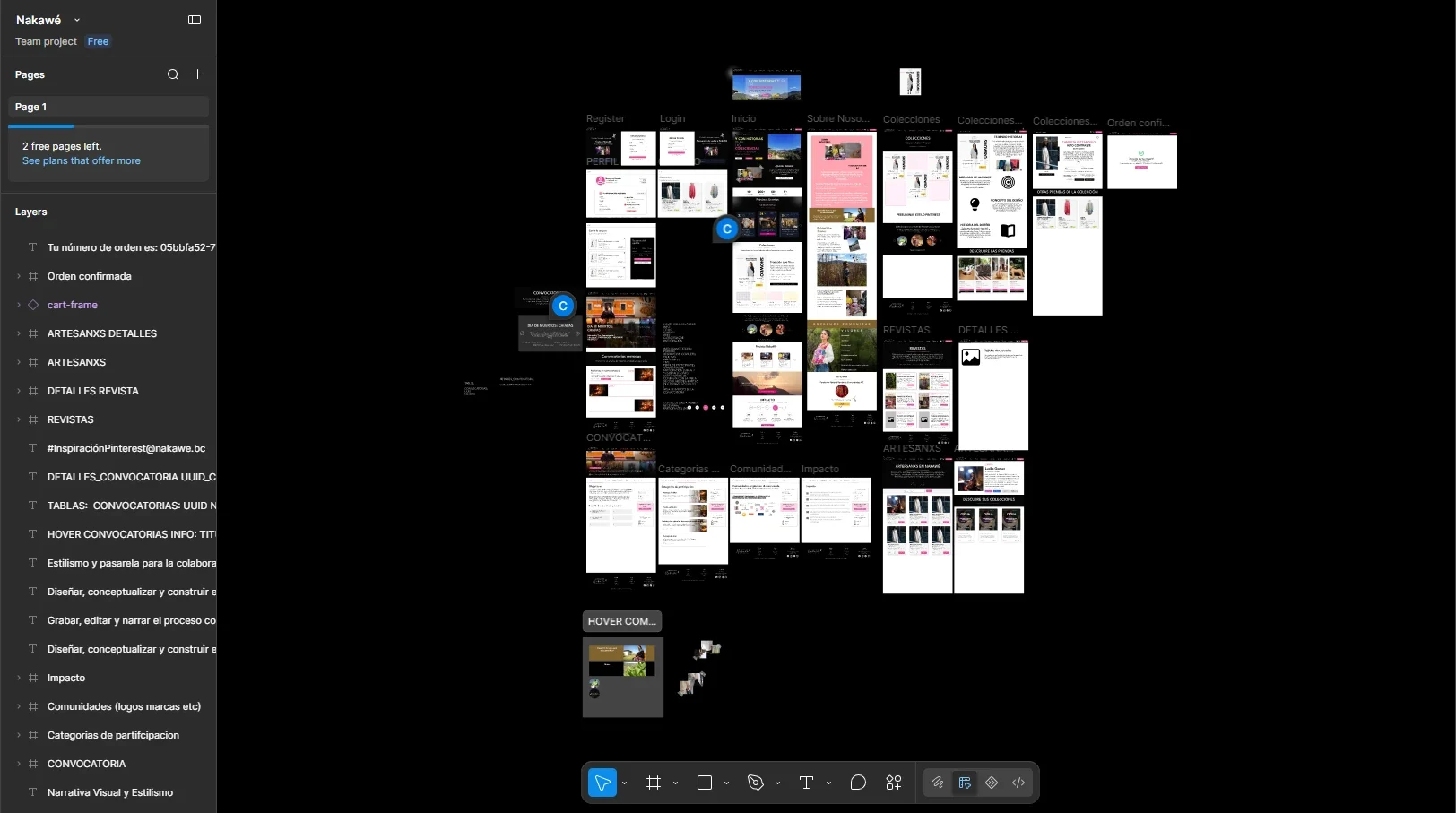
Interactive prototyping and a modular styling architecture for the product.
Nakawé's development began with high-fidelity prototypes in Figma to define visual hierarchy, typography, and navigation flows prior to code. During technical implementation, a pragmatic split was adopted: Tailwind CSS was used for small, repetitive, utility-driven micro-components, while core views, garment detail sheets, and central layouts relied on pure CSS Modules to guarantee strict isolation, clean specificity, and pixel-precise control.
08 · Cultura y gestión
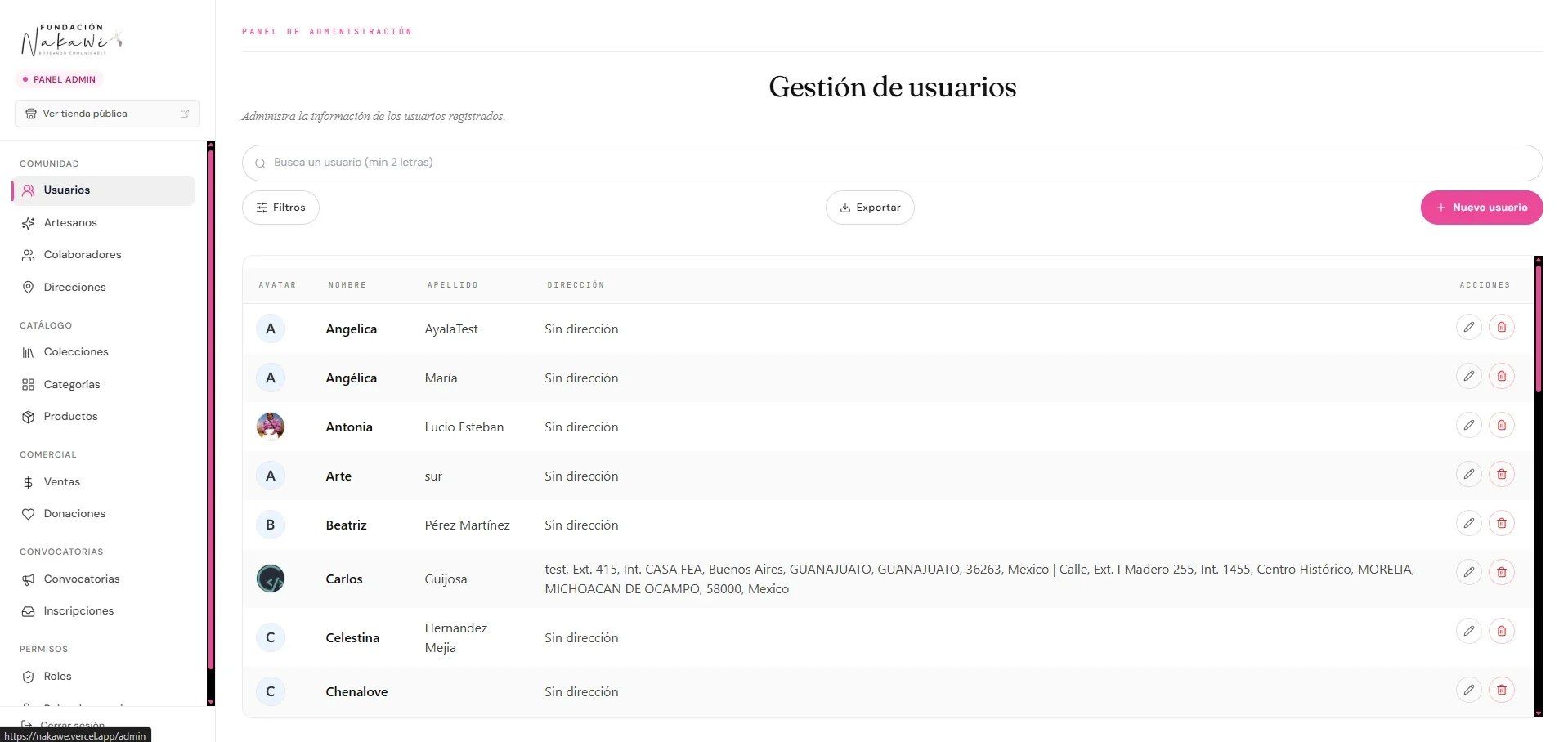
Nakawé extends beyond commerce: it features a digital magazine highlighting folk textile heritage and an open calls section for local craftspeople, managed via an administrative user dashboard.
09 · Preguntas frecuentes
Direct insights into the platform architecture, payment consistency, and engineering decisions.
It provides a direct, modern, and reliable digital storefront for premium handmade textiles, bypassing predatory middlemen and celebrating cultural craftsmanship.
The client never marks an order as paid independently. Server-side webhooks from Stripe and PayPal confirm amount and currency before releasing stock and generating receipts.
Neon offers serverless Postgres with database branching for testing, instant scaling during sales spikes, and ACID guarantees necessary for reliable inventory.
A pragmatic technical separation was adopted: Tailwind CSS for UI atoms, badges, and reusable micro-components where atomic utilities accelerate development, and pure CSS Modules for full page layouts, garment detail views, and complex structures, avoiding class bloat and specificity collisions.
Nakawé demonstrates that e-commerce can elevate cultural preservation through a fast, transparent, and accessible shopping journey across all devices.